Neo-Western Series: Redefining the Genre in 2026
Modern series in 2026 are actively redefining the neo-western genre by integrating classic frontier narratives with complex social commentary and diverse character arcs, offering a fresh take on timeless themes.
In an ever-evolving television landscape, the Neo-Western Series 2026 stands out as a genre that continues to captivate and challenge audiences. Far from the dusty plains of classic westerns, these contemporary narratives transplant familiar themes of justice, survival, and moral ambiguity into modern settings, offering a fresh lens through which to view American mythology. This article delves into how four groundbreaking series are not just revisiting the genre but fundamentally redefining it for a new era.
The Evolution of the American Frontier in Storytelling
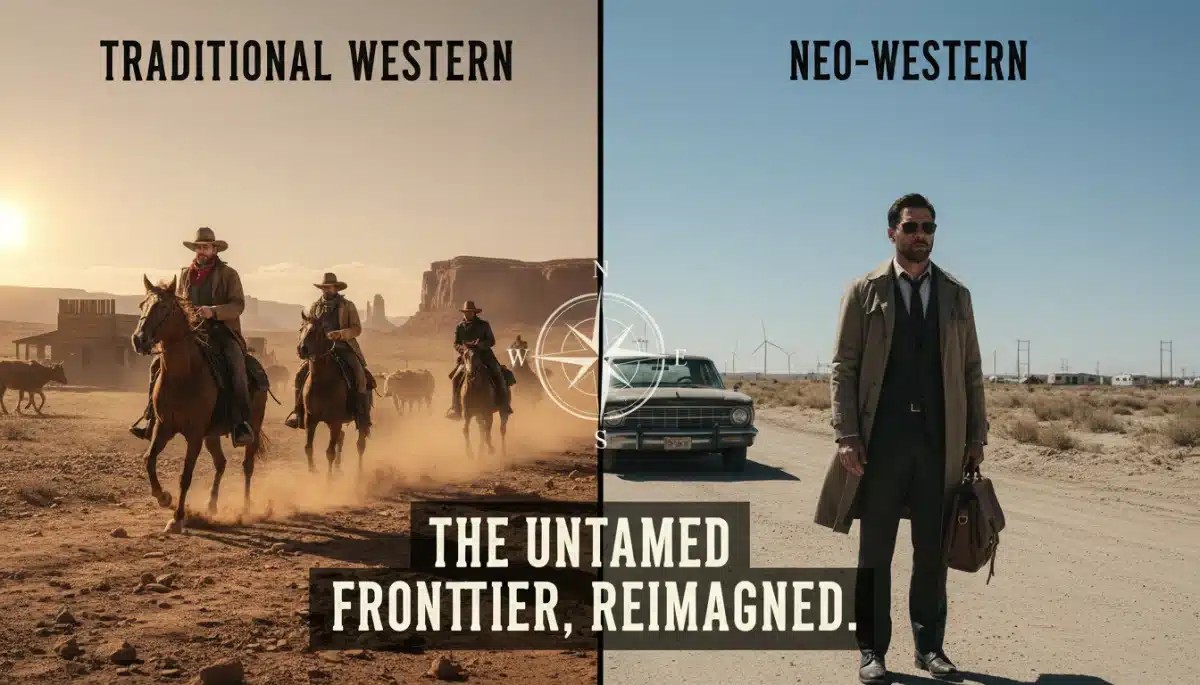
The western genre has always been a cornerstone of American storytelling, reflecting the nation’s ideals and anxieties. However, as society evolves, so too must its narratives. The neo-western takes the core tenets of the classic western—rugged individualism, lawlessness, and the struggle against vast, unforgiving landscapes—and recontextualizes them within contemporary issues. This evolution allows for a deeper exploration of themes like environmentalism, corporate greed, systemic injustice, and the lingering echoes of historical conflicts.
Modern audiences are drawn to these stories because they resonate with current societal challenges, moving beyond simplistic good-versus-evil dichotomies. The heroes and anti-heroes of the neo-western are often morally grey, grappling with internal conflicts as much as external threats. This complexity makes the genre incredibly rich and relevant, particularly in a world that increasingly questions established norms and narratives.
From Deserts to Urban Jungles: Setting the Scene
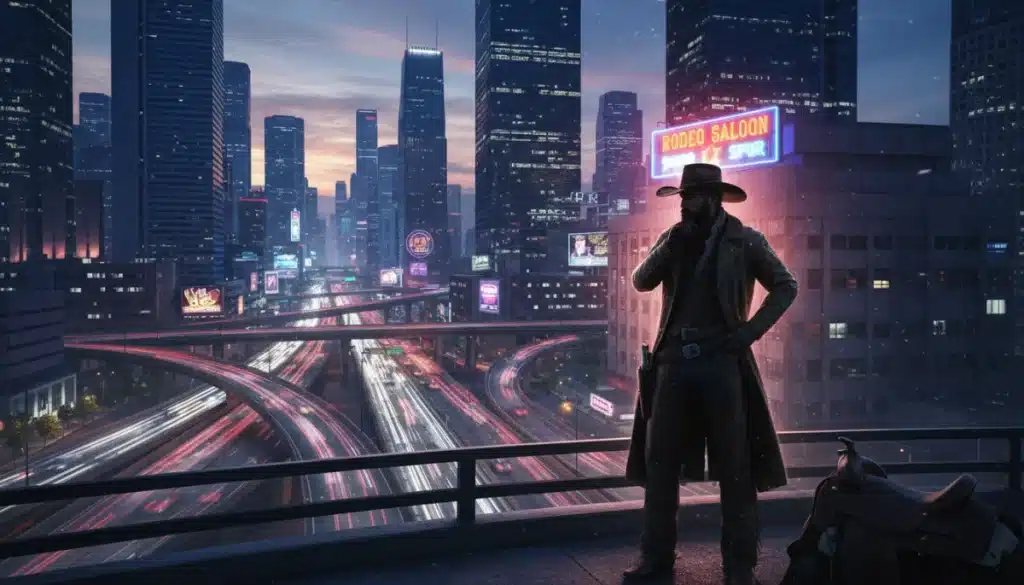
- Urban Landscapes: Many neo-westerns trade open plains for sprawling cities, where concrete canyons replace natural ones, and the struggle for survival takes on a different form.
- Suburban Sprawl: The seemingly mundane backdrop of suburbia can become a hotbed for crime and moral decay, mirroring the lawlessness of the old west.
- Borderlands: The literal and metaphorical borders of nations and cultures provide fertile ground for stories of identity, conflict, and displacement.
The settings in neo-westerns are not merely backdrops; they are active participants in the narrative, shaping the characters’ struggles and reflecting the genre’s updated thematic concerns. The genre’s ability to adapt its setting while retaining its core spirit is a testament to its enduring appeal and flexibility.
This re-imagining of the frontier allows creators to explore new dimensions of the human experience, showing that the spirit of the western is not confined to a specific historical period but rather a timeless exploration of humanity’s primal instincts and societal constructs. The genre continues to evolve, proving its resilience and capacity for reinvention.
Anúncios
Series 1: “Crimson Plains” and Environmental Justice
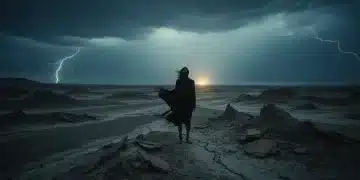
“Crimson Plains”, set in a fictionalized arid region of the American Southwest, exemplifies how a neo-western can tackle pressing environmental concerns. The series follows a tenacious indigenous law enforcement officer investigating a series of mysterious disappearances linked to a powerful energy corporation. It masterfully blends the classic lone-wolf lawman archetype with a narrative centered on resource exploitation and the displacement of native communities.
The series uses the stark, beautiful landscape not just as scenery but as a character itself, suffering under the weight of human ambition. The conflicts are less about shootouts and more about legal battles, corporate espionage, and the struggle to protect ancestral lands. The show’s strength lies in its nuanced portrayal of characters, where even the antagonists are driven by understandable, albeit misguided, motivations.
The narrative structure of “Crimson Plains” often employs slow-burn storytelling, allowing the tension to build through character development and intricate plot twists. This approach deviates from the fast-paced action often associated with traditional westerns, offering a more reflective and thought-provoking experience. The series has garnered critical acclaim for its bold storytelling and its fearless exploration of complex socio-environmental issues, proving that the neo-western can be both entertaining and profoundly relevant.
Character Arcs: Beyond the Archetype
- Complex Protagonists: Heroes are often flawed, grappling with personal demons and moral compromises.
- Nuanced Antagonists: Villains are rarely purely evil, often driven by desperation, ambition, or a distorted sense of justice.
- Diverse Representation: The genre increasingly features characters from varied backgrounds, offering multiple perspectives on the frontier experience.
“Crimson Plains” demonstrates that the neo-western is an ideal vehicle for narratives that demand a deeper engagement with contemporary ethical dilemmas. It’s a testament to the genre’s capacity to evolve beyond its historical roots and address modern concerns with depth and gravitas.
Series 2: “The Last Outpost” and Digital Anarchy
“The Last Outpost” reimagines the lawless frontier in a hyper-connected 2026, where digital currency and data are the new gold, and cyber-outlaws roam the dark web. This series is a thrilling exploration of identity theft, corporate surveillance, and the struggle for digital freedom. The protagonist, a former hacker with a moral code, finds himself caught between powerful tech cartels and a burgeoning resistance movement.
The show cleverly substitutes horses with high-tech vehicles, dusty saloons with encrypted chat rooms, and six-shooters with sophisticated hacking tools. Yet, the core themes remain unmistakably western: a lone individual fighting against overwhelming odds, seeking justice in a world where the rules are constantly being rewritten. The series uses a gritty, cyberpunk aesthetic to underscore the harsh realities of this new digital frontier.
The narrative frequently explores the ethical implications of advanced technology, asking profound questions about privacy, control, and the very definition of freedom in a digital age. The characters are often forced to make impossible choices, highlighting the moral ambiguities inherent in a world where information is power. “The Last Outpost” proves that the spirit of the western can thrive even in the most futuristic of settings, adapting its core narratives to fit the anxieties of a technologically advanced society.
Series 3: “Ghost Town Revival” and Economic Disparity
“Ghost Town Revival” takes a poignant look at the forgotten towns of rural America, transforming the classic ghost town trope into a commentary on economic disparity and the decline of small-town life. The series centers on a community struggling against foreclosure and the predatory practices of a ruthless real estate developer. A reluctant hero, a disillusioned former city planner, returns to his hometown to rally its residents and fight for its survival.
This series uses the desolate beauty of these decaying towns to great effect, highlighting the human cost of economic neglect. The conflicts are less about physical violence and more about bureaucratic battles, community organizing, and the resilience of the human spirit. It’s a story about reclaiming identity and fighting for a future when the past seems to offer little hope.
Community vs. Corporation: A Modern Showdown
- Collective Action: Emphasis on communities banding together against external threats, echoing frontier solidarity.
- Bureaucratic Obstacles: The ‘villains’ are often faceless corporations or government entities, representing systemic challenges.
- Cultural Preservation: Stories often highlight the fight to maintain cultural heritage against encroaching modernization.
“Ghost Town Revival” resonates deeply with audiences who have witnessed similar struggles in their own communities. It redefines the western by showing that the fight for land and survival is not just a historical relic but a very present reality for many, making it a powerful and relevant entry in the Neo-Western Series 2026 landscape.
Series 4: “The Nomad’s Code” and Shifting Identities
“The Nomad’s Code” is a compelling examination of identity and belonging in a rapidly globalizing world, set against the backdrop of a sprawling, interconnected network of transient communities. The series follows a protagonist who exists outside traditional societal structures, navigating a complex web of allegiances and betrayals in a search for a place to truly call home. This narrative mirrors the classic western drifter, but with a contemporary twist on self-discovery and the fluidity of modern identity.
The series explores how individuals forge their own codes of conduct in a world lacking clear moral compasses, reminiscent of the self-governing principles of the old frontier. It delves into themes of migration, cultural assimilation, and the constant negotiation of personal values against the demands of various communities. The landscapes are varied, shifting from temporary settlements to bustling transport hubs, reflecting the transient nature of its characters’ lives.
“The Nomad’s Code” challenges conventional notions of heroism and villainy, presenting characters whose motivations are deeply personal and often contradictory. The series suggests that the ultimate frontier might be the exploration of one’s own identity in a world that constantly pushes against fixed definitions. Its innovative storytelling and character development have positioned it as a standout example of how the neo-western can transcend traditional genre boundaries.
The Enduring Appeal of the Neo-Western in 2026
The neo-western genre continues to thrive in 2026 because it offers a flexible framework for exploring universal human experiences through a distinctly American lens. By updating familiar tropes and integrating contemporary issues, these series keep the spirit of the western alive and relevant. They prove that the fundamental struggles of humanity—the quest for justice, the fight for survival, and the search for meaning—are timeless, regardless of the setting.
The four series discussed—”Crimson Plains,” “The Last Outpost,” “Ghost Town Revival,” and “The Nomad’s Code”—each contribute uniquely to this redefinition. They push the boundaries of storytelling, offering nuanced characters and complex narratives that resonate with a modern audience. Their success underscores the genre’s adaptability and its capacity to reflect the evolving concerns of society.
Ultimately, the power of the Neo-Western Series 2026 lies in its ability to show us that the frontier is not just a historical place but a continuous state of being, a challenge that humanity faces in every era. These shows invite us to reconsider what it means to be a hero, what constitutes a wilderness, and how we define justice in a world that is constantly changing.
| Key Aspect | Description of Redefinition |
|---|---|
| Thematic Depth | Neo-westerns explore complex modern issues like environmentalism, economic disparity, and digital ethics. |
| Setting Evolution | Frontiers shift from physical landscapes to urban sprawls, digital realms, or declining rural towns. |
| Character Complexity | Protagonists and antagonists often possess moral ambiguity, reflecting real-world complexities. |
| Narrative Focus | Emphasis on legal, corporate, or societal struggles over traditional shootouts and physical confrontations. |
Frequently Asked Questions About Neo-Westerns in 2026
Neo-westerns transplant classic western themes like justice and survival into modern settings, often addressing contemporary social, economic, or environmental issues. They typically feature more morally complex characters and less emphasis on historical accuracy, focusing instead on thematic resonance with today’s world.
Their popularity stems from their ability to reflect current societal anxieties and challenges through a familiar, yet updated, narrative framework. Audiences connect with stories that explore complex ethical dilemmas and diverse perspectives, moving beyond the simpler narratives of traditional westerns.
Modern settings allow for new forms of conflict and character development. Urban environments, digital spaces, or economically depressed towns create unique challenges and opportunities for exploring themes of lawlessness, individualism, and the search for identity in a contemporary context.
Neo-westerns often feature anti-heroes, flawed protagonists, and nuanced antagonists. Characters are typically driven by complex motivations, reflecting the moral ambiguities of modern life. They can range from law enforcement officers to hackers, community organizers, or transient individuals seeking belonging.
While rooted in American mythology, the themes of the neo-western are universal, making the genre adaptable across different cultures. Stories of frontier justice, survival, and moral struggle resonate globally, allowing for diverse interpretations and international productions that broaden its scope beyond a purely American focus.
Conclusion
The neo-western genre in 2026 is a vibrant testament to the enduring power of storytelling. By taking the foundational elements of the classic western and infusing them with contemporary relevance, series like “Crimson Plains,” “The Last Outpost,” “Ghost Town Revival,” and “The Nomad’s Code” are not merely entertaining; they are critical reflections on our modern world. They demonstrate that the spirit of the frontier, with its inherent challenges and opportunities for heroism, remains deeply ingrained in our collective consciousness, continually evolving to speak to new generations. The genre’s ability to adapt, innovate, and provoke thought ensures its place as a compelling and significant part of the television landscape for years to come.